I started by designing three client agents. Then I built a system the team could run without me.
Meta was building custom AI agents on WhatsApp for some of its largest business clients. Each needed an agent that could handle real customer journeys inside a conversation.
But the team was new, client requirements were messy, and almost nobody had designed for WhatsApp before. There were more clients than there was of me.
I designed the first clients myself, then made what I knew portable as I went.
I used AI to turn messy requirements into repeatable design briefs, gave the team and clients a shared view of what was possible, and built a workshop format others could run without me.
All three client agents shipped, and the workshop format expanded to seven clients. Six of those workshops ran without me.
The pilots also showed what these agents could do for businesses:
Pilot results reported by each client and credited to the product and teams behind it.
The one designer who knew WhatsApp
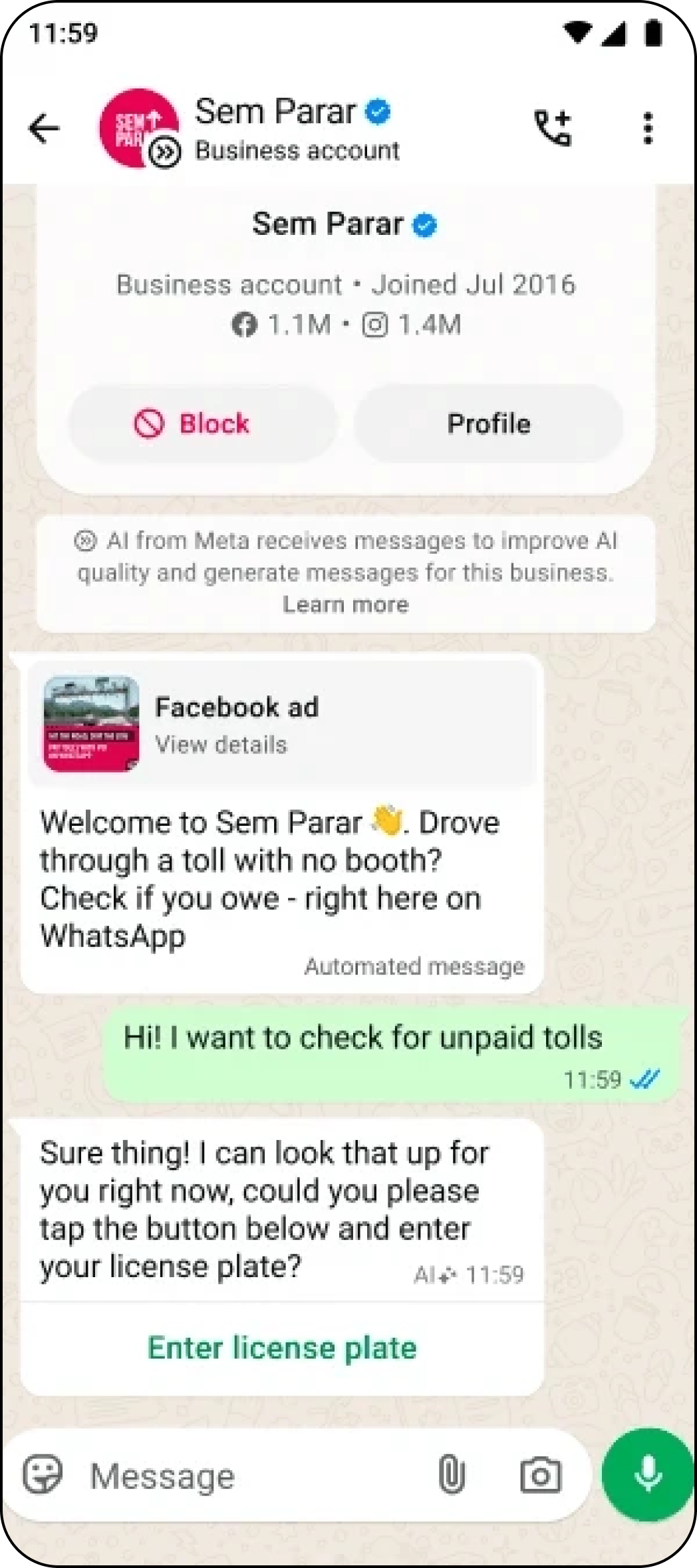
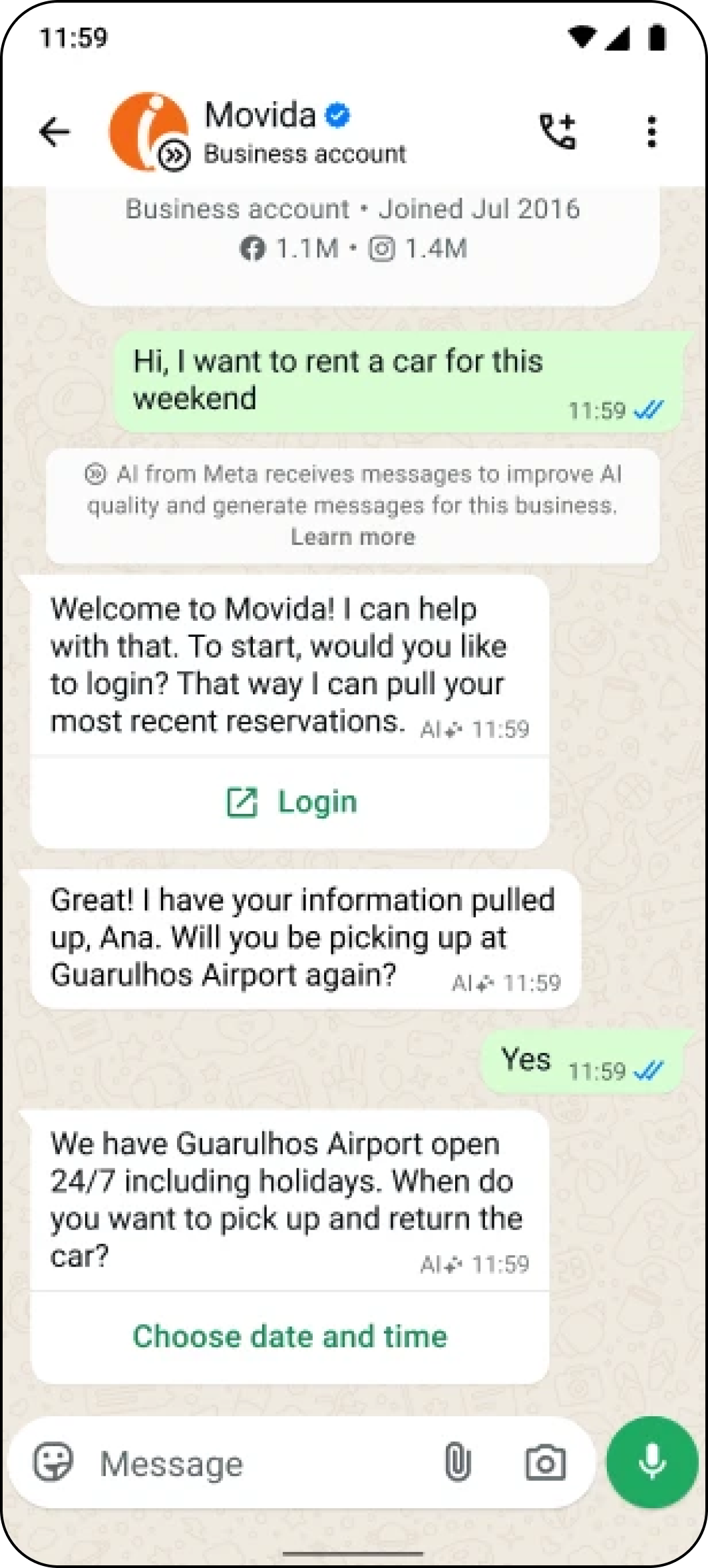
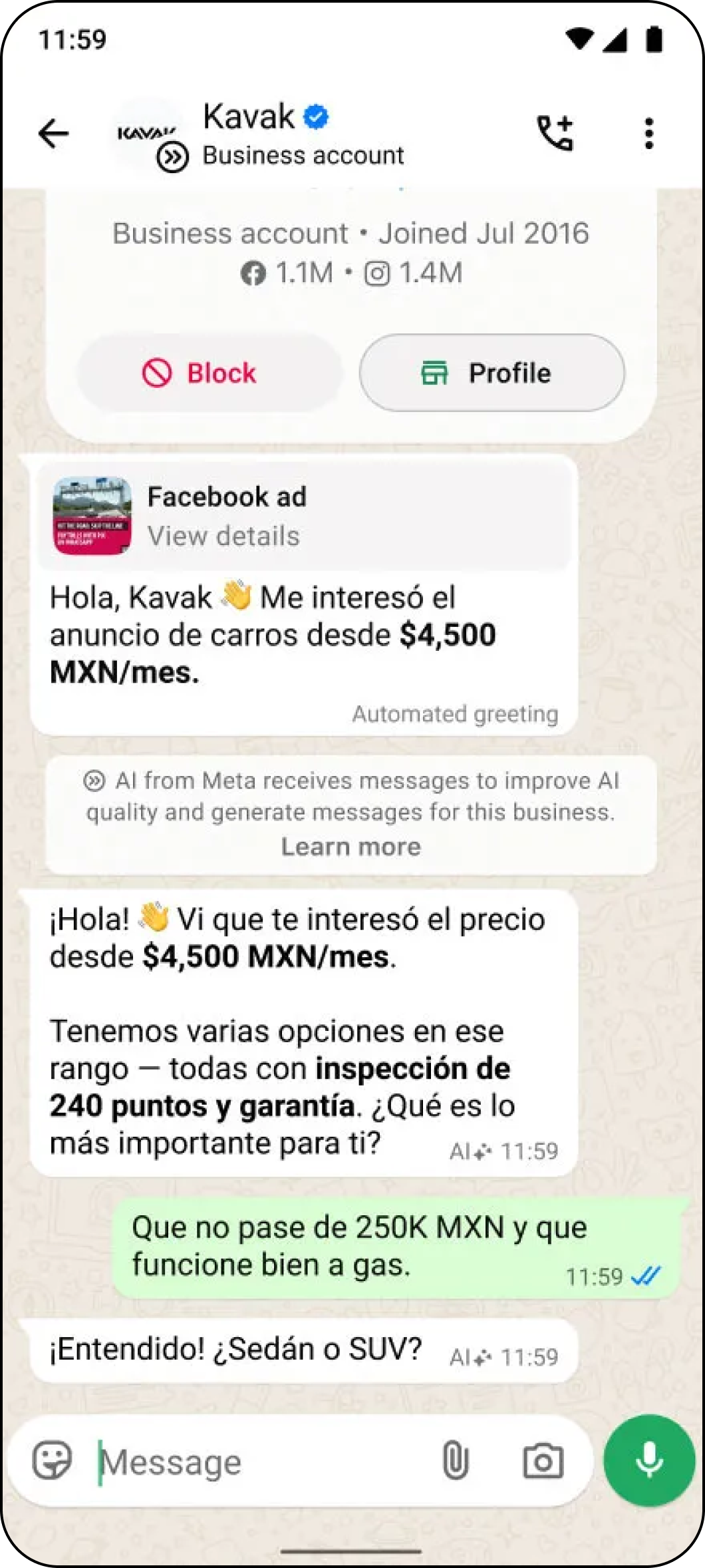
Meta was building AI agents on WhatsApp for some of its largest business clients. Not support bots. These agents needed to rent a car, collect a toll payment, or qualify a car buyer without the customer ever leaving the conversation.
The enterprise team was new, and almost nobody on it had designed for WhatsApp before. I’d spent years working on the platform, so I was pulled in to help design the first client experiences and figure out what an AI agent could actually do inside a WhatsApp conversation.
Designing for what could ship, not what could demo
The first designs explored richer components, but every interaction came with a tradeoff: what felt natural in WhatsApp, what actually improved the journey, and what engineering could build in time.
I kept coming back to the simplest version that worked. Often that meant text. For Sem Parar, it meant using WhatsApp’s existing PIX payment flow instead of rebuilding one. The goal wasn’t to make the AI look sophisticated. It was to get the whole journey working.
Screens from Meta and WhatsApp's public client success stories.
There were more clients than there was of me
I was becoming the bottleneck
Designing the first agents taught me what kept repeating. But I couldn’t be the WhatsApp translator on every client. So I started turning what I knew into things other people could use.
Make messy requirements usable
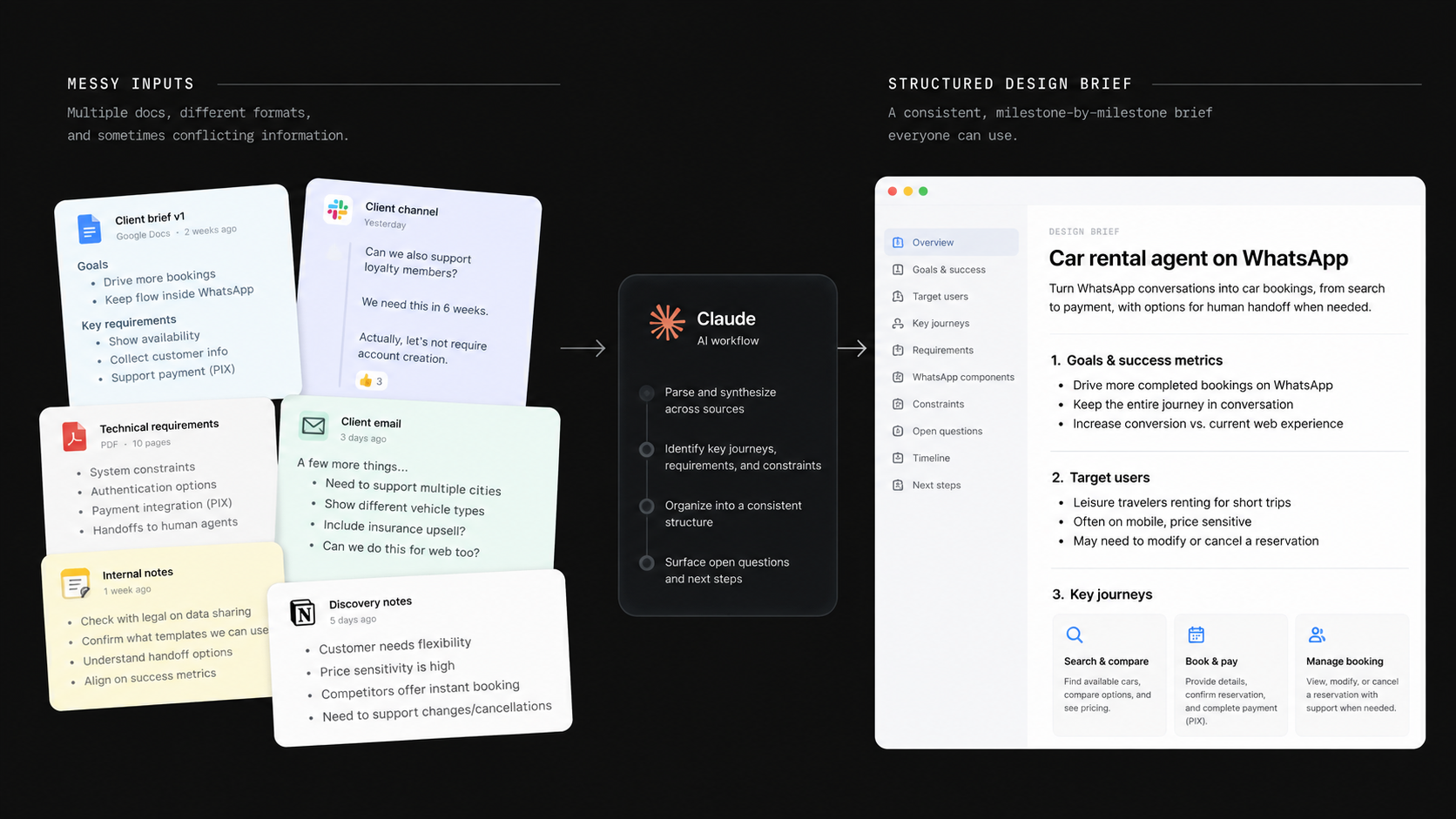
Client requirements arrived across docs and versions that didn’t always agree. I built an AI workflow that turned them into the same milestone by milestone design brief, so every designer could start with a clear picture of the journey, constraints, and open questions.
Get the WhatsApp knowledge out of my head
The same questions kept coming up: What components exist? What can they contain? What can we customize?
I organized those answers into a shared library designers and clients could browse themselves.
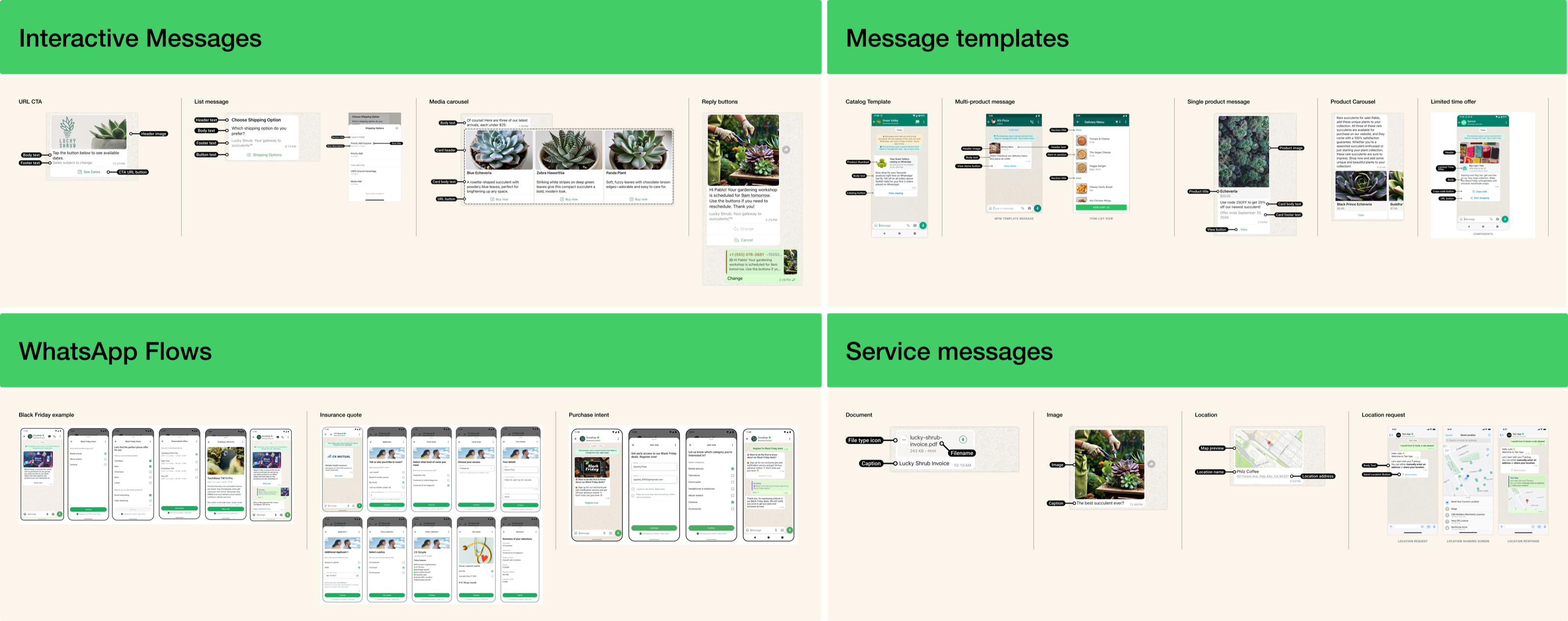
The point was to stop being the answer
I still taught the WhatsApp quirks that were harder to encode and reviewed flows as they took shape. But designers could now start without waiting on me.
Four days to make the agent real
Day one: Get the first experience right
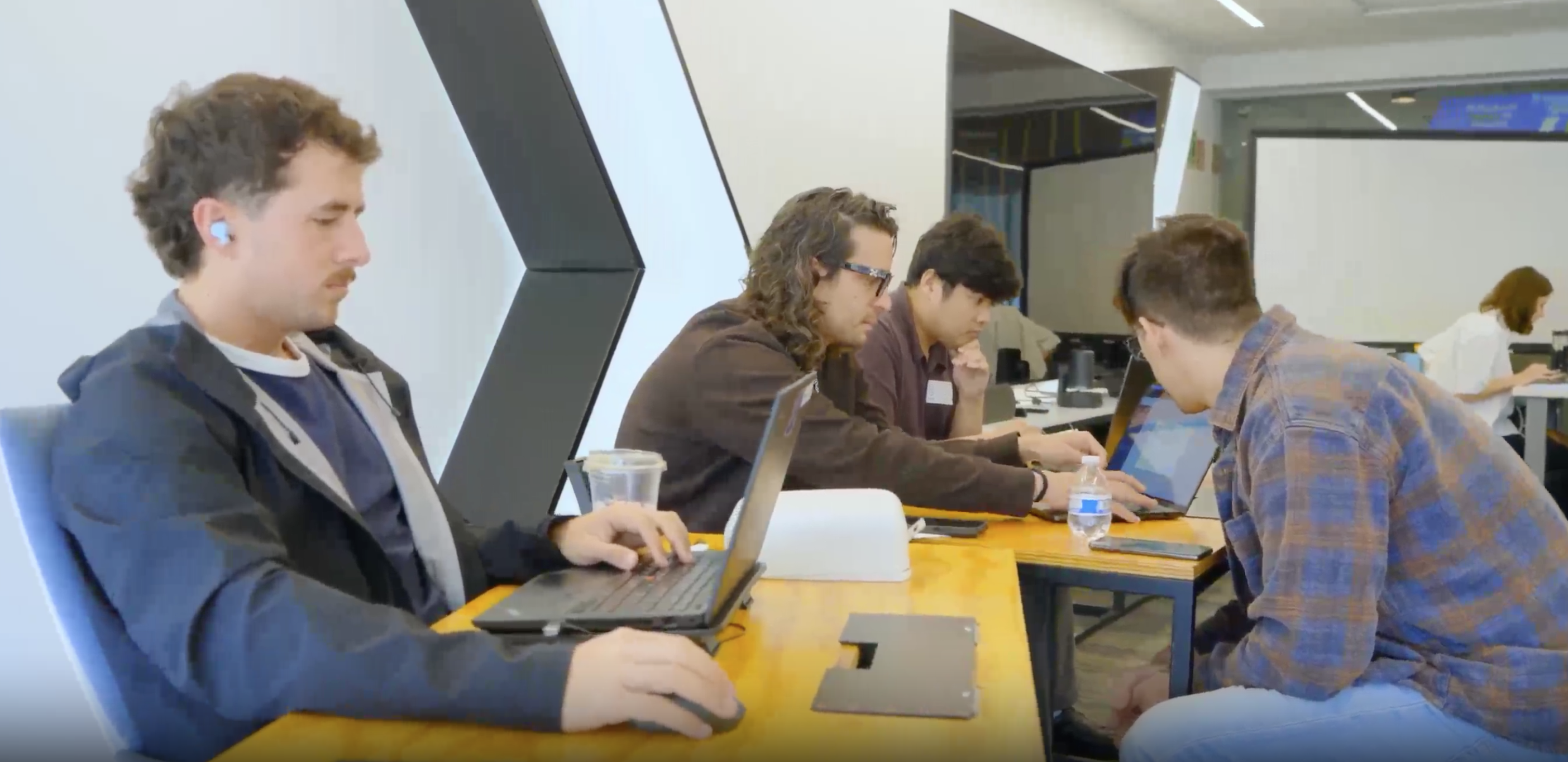
We came to Mexico City with a first experience, then spent the day with Kavak’s product, AI, and engineering teams tightening it together.
We worked through how the agent qualified shoppers, when Kavak’s existing buyer and seller agents took over, and what needed to change before it could ship.
Day two: Ask what the agent should do next
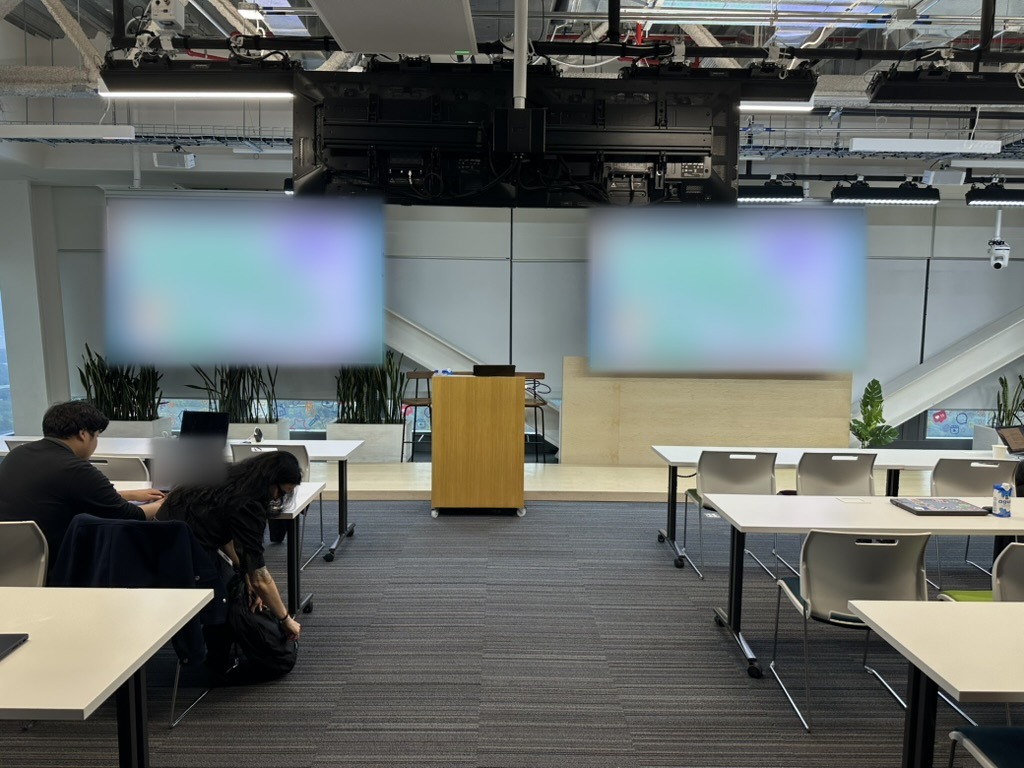
With the first experience on track, I ran a FigJam workshop with Kavak and Meta Creative Shop around the problems their customers still faced. We pulled in local ideas and explored where new AI components and experiences could help.
I brought the strongest opportunities back to our design team and used them as prompts for what we should build next.
Instead of designing another one off experience for Kavak, we explored new AI components and patterns that could solve the same kinds of problems across future clients.
Day three: Try to break it before we left
Back on the first experience, I organized testing around its key scenarios. We logged what broke, handed bugs directly to engineering, and retested fixes while everyone was still in the room.
Day 4: The final experience
We folded the fixes back into the journey and landed the final experience together before leaving Mexico City.
The next six workshops ran without me
Four designers took the same format to six more clients.
Seven clients started revealing one product
The insights were scattered across the team
Each workshop surfaced different gaps, but the learning stayed with whichever designer had been in the room. I had everyone capture what they learned, then built an AI workflow to find the patterns across clients.
Some gaps were ours. Others belonged to WhatsApp
I separated what we could solve in the agent experience from what the platform itself needed to support. We turned the recurring platform gaps into requirements and design explorations that fed into the next round of roadmap planning.
Then Movida took the stage
A few days after I left Meta, Business AI launched at Conversations 2026. Movida was featured onstage, showing the car rental experience I’d helped design and prototype months earlier.
By then, Movida, Sem Parar, and Kavak all had public success stories. What started as three custom client agents had become part of a much bigger product story.
I got good at surviving a problem I should have prevented
Requirements drift followed us from client to client. My AI workflow made it manageable, but next time I’d attack the problem upstream: one requirements format, one source of truth, before anyone starts designing.
The bigger lesson stuck with me. When you’re the person everyone comes to for answers, the job isn’t to get faster at answering. It’s to build the tools, patterns, and ways of working that make you less necessary.